
Teaching Kids the Value of Money (Without Being Strict)
"Do you think money grows on trees?" We've all wanted to say it. Here is how to teach gratitude and value without turning into a Scrooge.
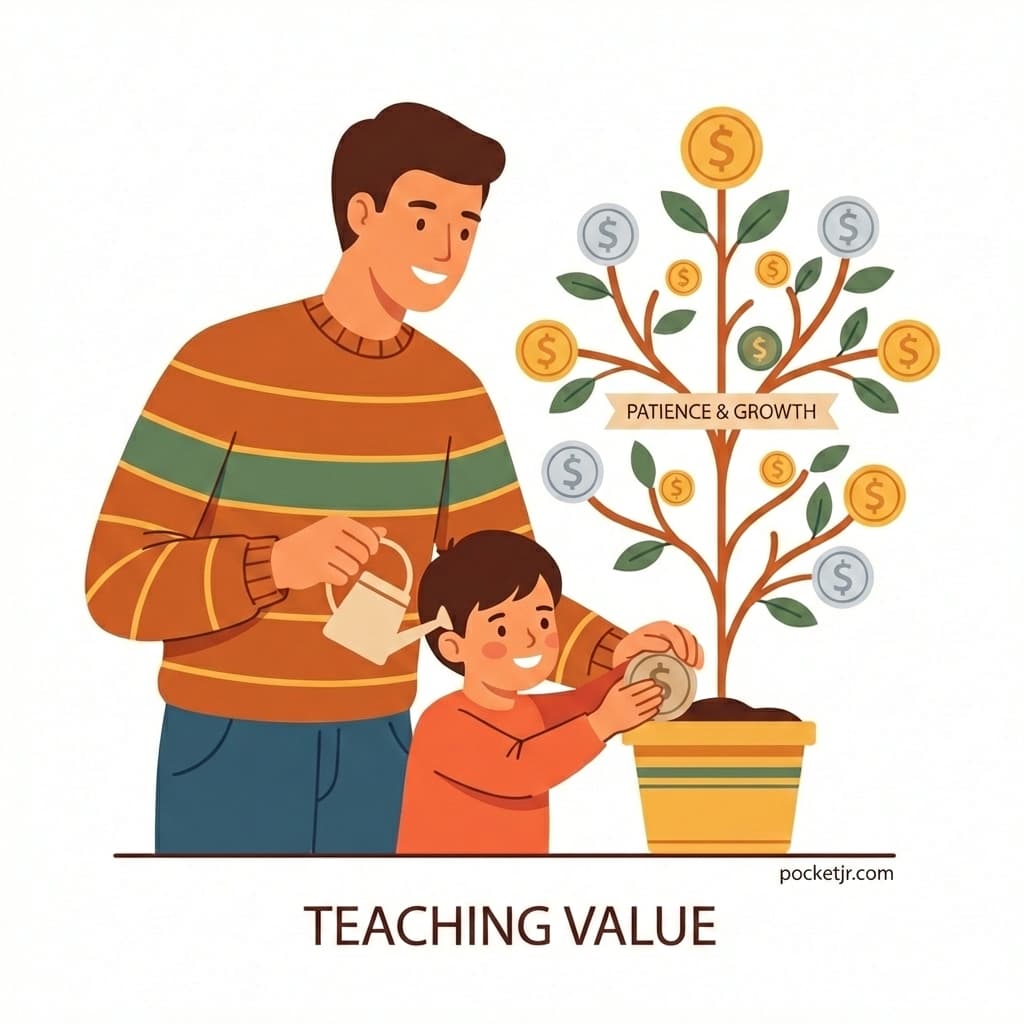
The "Instant Gratification" Epidemic
In a world of Amazon Prime and on-demand streaming, kids rarely experience waiting. This erodes their understanding of value. If they want it, they get it. If it breaks, we replace it.
To teach value, we must re-introduce friction.
Strategy 1: The "Hours Worked" Rule
Stop talking in dollars. Start talking in effort.
Say: "That LEGO set costs 10 weeks of allowance."
This instantly reframes the purchase. Is this toy worth waiting 2.5 months for? Usually, the answer is no.
Strategy 2: The "Skin in the Game"
Never pay 100% for a "Want". Even if you can afford it.
When they spend their own money, they treat the item better. They worked for it. They value it.
Strategy 3: Opportunity Cost
Teach them that spending on X means giving up Y.
PocketJr Activity:
Show them their "Lifetime Earnings" vs "Current Balance" in the app.
"Look, you've earned $200 this year, but you only have $10 left. That $190 went to candy and small toys. If you had saved it, you'd have the iPad by now."
Seeing the "ghost of money past" in their transaction history is a powerful reality check.
Start Small, Start Now
You don't need a lecture. You just need a system that lets them handle money, make choices, and feel the consequences. PocketJr gives you the tools to automate allowance and track their choices safely.