
Digital Allowance vs. Cash: Which is Better?
The ceramic piggy bank is getting an upgrade. In an increasingly cashless world, is sticking to dollar bills holding your child back, or is a debit card too much responsibility too soon?
The Magic Card Phenomenon
A parent shared this story with us: "My 6-year-old asked for a $50 LEGO set. I said we didn't have the money for it right now. He looked confused and pointed to my phone: 'Just tap the black rectangle on the machine like you always do!'."
Because children today rarely see the physical pain of money leaving a wallet, they perceive credit cards and Apple Pay as infinite money generators. This is the modern parenting challenge: how do you teach the value of a dollar when dollars are invisible?
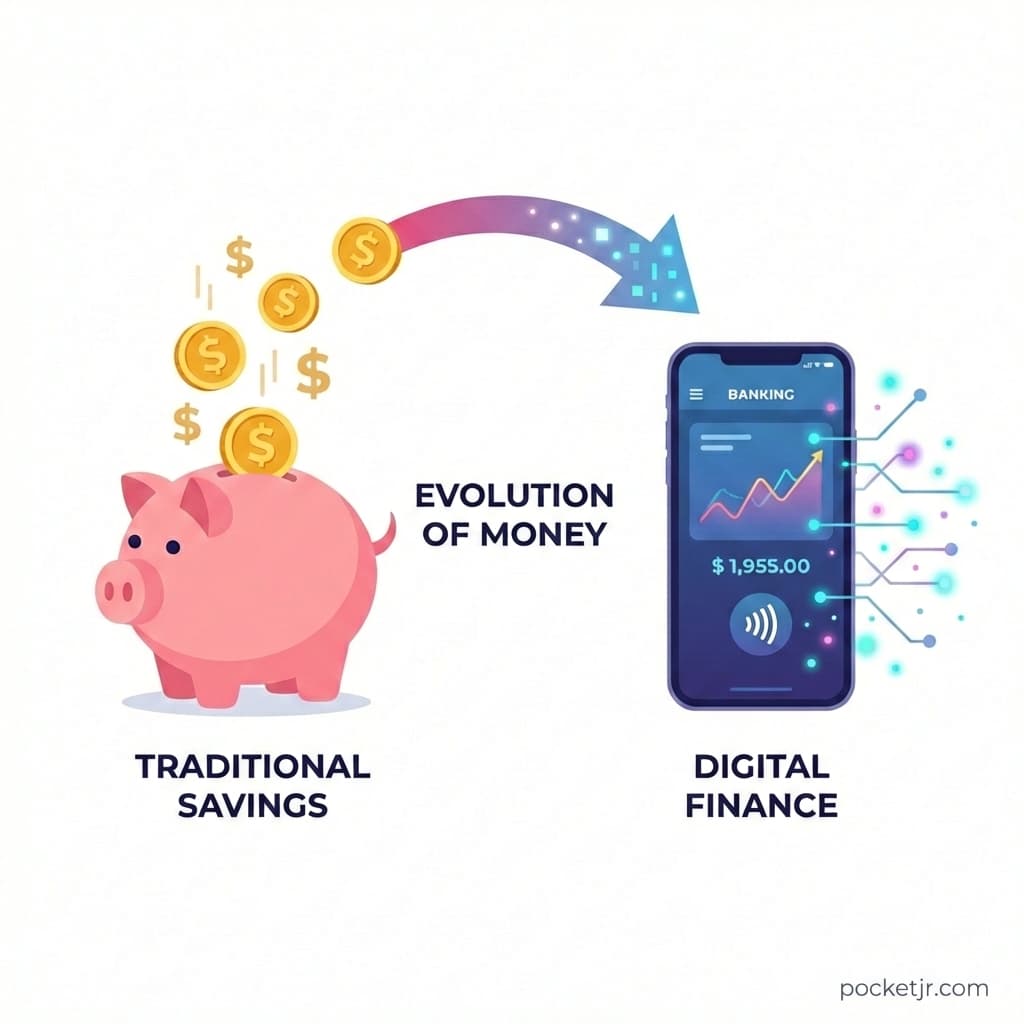
The Great Debate: Tangible vs. Modern
The argument usually breaks down into two passionate camps. Traditionalists argue that because children's brains are highly tactile, cash is the only way they truly understand math and consequence. Modernists argue that since adults manage their finances entirely via screens, depriving a child of a digital interface leaves them unprepared for reality.
Both camps are right. Here is the definitive breakdown of when each method shines.
Team Cash
- Very tangible; highly effective for ages 5-9.
- The "Pain of Paying" is neurologically real when handing over cash.
- Gets lost easily on the playground or washed in the laundry.
- Impossible for parents to track historical spending.
- Parents rarely have correct change on Allowance Day.
Team Digital
- Matches the real adult world they will enter.
- Automated payouts: no more "I forgot to pay you."
- Creates an unalterable history/receipt of choices.
- Conceptually abstract for toddlers.
- Some prepaid cards charge monthly subscription fees.
Why Digital is Eventually Mandatory
Let's be honest: when was the last time you paid for an airline ticket, an Amazon delivery, or a major grocery haul with paper cash? We live in a digital economy.
Teaching kids to manage only physical cash is like teaching them to use a typewriter instead of a computer. It is a fundamentally useful mechanism for understanding the mechanics of language (or math), but it's not the tool they will use in the workforce. They must quickly graduate from the tactile to the abstract.
The 'Virtual Ledger' Strategy (Ages 7-12)
So, should you get your 8-year-old a physical debit card with a $5 monthly fee? Not necessarily. The best middle ground is a Virtual Ledger (like PocketJr). It combines the safety of "The Bank of Mom & Dad" with the modern feel of an app.
A virtual ledger is essentially a scoreboard. No real money moves into outside accounts. It simply logs how much of your parental money "belongs" to the child's budget.
How it works at the store:
Your child wants a $15 action figure. They check their PocketJr app and see a balance of $25.
You physically pay for the toy at the register using your own adult credit card or Apple Pay.
Before leaving the store, you open PocketJr. You have your child personally press the big "Remove $15" button. They watch their digital balance drop from $25 down to $10. The invisible money just became visible.
This method completely bridges the psychological gap. You keep control of the actual cash. Nobody loses a $20 bill on the playground. There are no monthly banking fees. And yet, your child learns the exact mechanics of modern digital money management.
Frequently Asked Questions
Is cash obsolete for teaching kids about money?
No, cash is not obsolete, especially for children under 8. Physical cash provides a highly tangible, visual way to understand that money is finite. When they hand over a $5 bill, it physically leaves their hand. However, once a child turns 10, relying solely on cash fails to prepare them for the modern digital economy.
At what age should a child get a debit card?
Most experts suggest introducing a real debit card with a connected teen checking account between ages 13-15. This allows them to practice managing digital funds for socializing and entertainment while still under parental supervision.
What is the 'Invisible Money' problem?
The 'Invisible Money' problem occurs when children only see their parents tapping credit cards or phones to pay for things. Because there is no physical exchange of currency, the child subconsciously learns that the magic card has unlimited funds, missing the crucial step where the bank account drains.
Is an allowance app better than a real bank account?
For ages 5-12, yes. An allowance app (Virtual Ledger) acts as a simulator. It has zero risk, no banking fees, and allows parents full control. A real bank account should be the next step (around age 13) once they have mastered the simulator.
How do I transition from the piggy bank to a digital allowance?
Use a transition phase. For one month, give half their allowance in cash and half on a digital ledger like PocketJr. Let them physically deposit their cash into the 'Bank of Mom and Dad' in exchange for you updating their digital app balance. This connects the physical object to the digital number.
Stop Tracking Allowance in Your Head
Switch to the Virtual Ledger system. It gives your child the financial autonomy of an app interface, while giving you 100% control over the real dollars.
Start Your Virtual Ledger For Free