
How to Talk to Kids About Money
Money doesn't have to be a taboo topic. Here's how to have honest, age-appropriate conversations that stick.
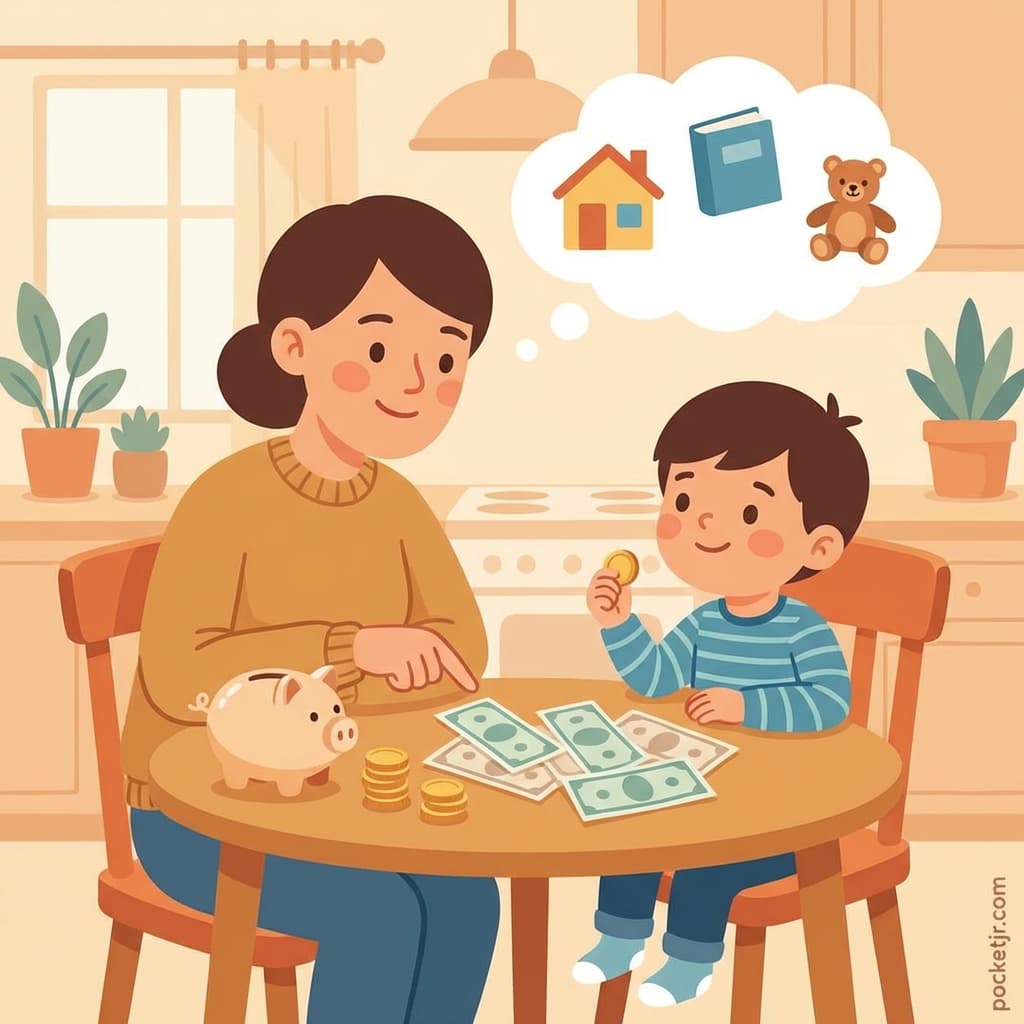
Ages 5-7: Keep It Simple
At this age, abstract concepts like "budgeting" are meaningless. Use concrete examples:
- "We trade money for things we need." Show them: You give the cashier money, they give you groceries.
- "Money is limited." Use a clear jar with coins. "This is all we have for treats this week."
- "We have to choose." "We can get ice cream OR go to the park. Which do you want?"
Ages 8-10: Introduce Trade-Offs
Now they can handle slightly more complexity:
- "Why can't we buy everything?" Explain: "Mom and Dad work to earn money. We have to decide what's most important."
- Involve them in small decisions: "We have $20 for dinner. Pizza or burgers?"
- Show them bills (age-appropriate): "This is the electric bill. It costs $100 to keep the lights on."
Ages 11-13: Real Talk
Preteens can handle honest (but not scary) conversations:
- "How much do you make?" You don't have to share exact numbers, but you can say: "Enough to pay for our house, food, and some fun stuff."
- "Why do we say no sometimes?" Be honest: "We're saving for a family vacation. That means we can't buy new shoes right now."
- Show them your budget (simplified): "50% goes to bills, 30% to food and fun, 20% to savings."
The Secret Weapon: Everyday Moments
Turn Daily Life Into Lessons
You don't need a formal "money talk." Use these moments:
- At the grocery store: "This brand costs $2 more. Is it worth it?"
- Paying bills: "I'm paying the water bill. That's why we don't leave the faucet running."
- When they ask for something: "Let's check your PocketJr balance. Do you have enough?"
The best lessons happen naturally, not in lectures.
Make Money Conversations Easy
PocketJr gives you a visual tool to discuss spending, saving, and goals with your kids.
Start the Conversation