
Allowance vs. Chores: The Great Parenting Debate of 2026
The "No Work, No Pay" ideology is a staple of traditional parenting. But is tying allowance directly to chores the most effective way to teach financial literacy today? Modern experts are starting to disagree.
The Core Objective: What are you actually trying to teach?
"Before choosing an allowance model, you must decide your primary goal: Are you trying to teach Work Ethic, or are you trying to teach Money Management?"
While they seem intertwined, they are completely separate life skills. Using a single tool (allowance) to teach both often leads to confusion for a developing child's brain. When you mix them poorly, you end up negotiating with an 8-year-old who feels they should be paid to brush their teeth.
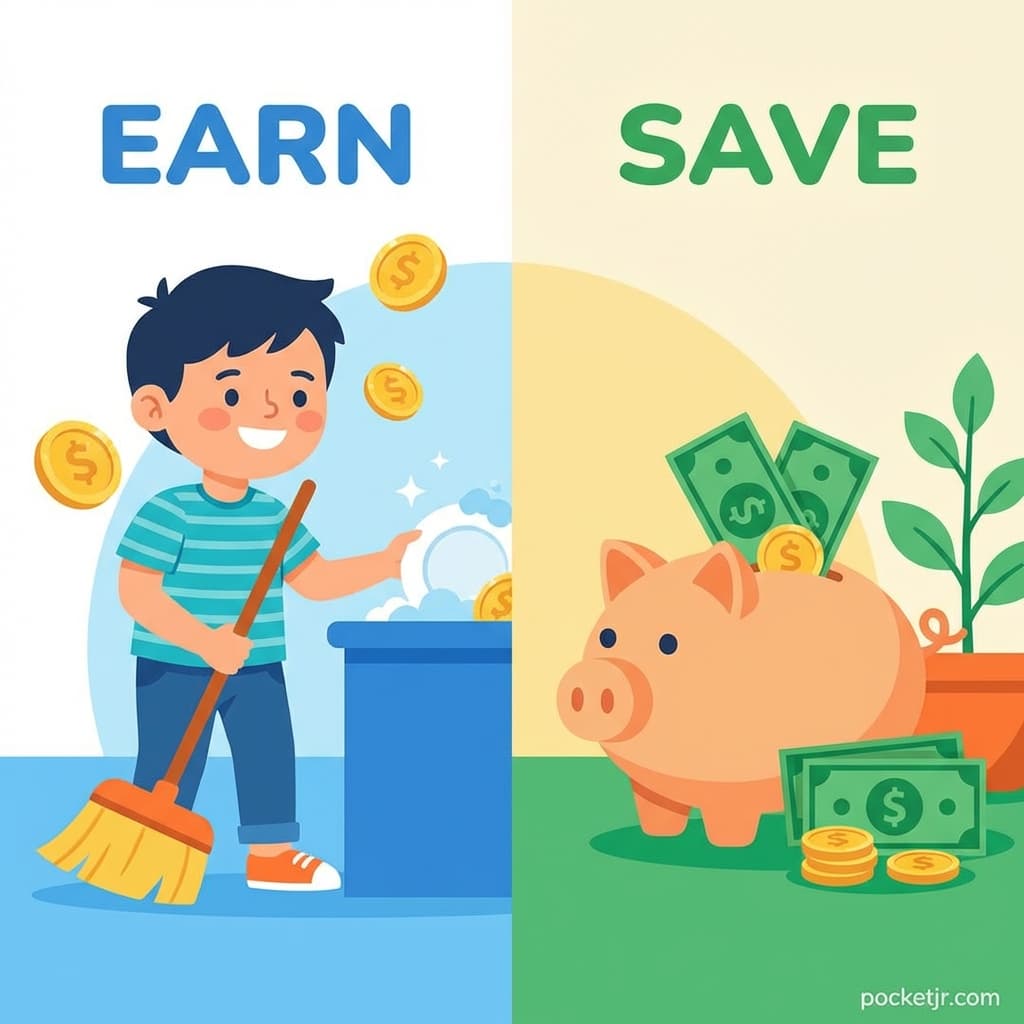
The Two Schools of Thought
Some child psychologists swear by "Earned Allowance" to simulate the real world labor market, while others advocate for "Citizen of the Household" allowance to remove money from the discipline equation.
The Three Pillars of Allowance Design
In 2026, parental approaches have coalesced into three distinct models. Understanding where you fall on this spectrum is the first step to building a system that actually works for your family without requiring daily micromanagement.
Model 1: The 'Wage' Earner
The classic model: "If you don't do the dishes, you don't get your $5." Every chore is assigned a dollar value, and the weekly payout is purely transactional.
The Payoff
Directly simulates the real-world labor market. Creates a massive, undeniable 'if-then' mental shortcut linking effort directly to reward.
The Risk
You lose leverage if your child decides they have 'enough' money. If they don't want a toy this week, they have zero motivation to take out the trash, and the house stays dirty.
Model 2: The 'Citizen' Member
Allowance is treated as a consistent budget for financial learning. Chores are not tied to money; they are simply the rent you pay for living in the house.
The Payoff
Allows for consistent, uninterrupted practice of budgeting and saving. Fully removes parental negotiation from basic household help. You expect chores to be done because they live there, end of story.
The Risk
Can create an 'entitlement' mentality if the "Citizen" responsibilities aren't strictly enforced through other disciplinary means (like loss of screen time).
Model 3: The 'Hybrid' Professional
A base 'stipend' for money management practice + independent 'Extra Gigs' for discretionary income.
The Payoff
The undisputed best of both worlds. They get a predictable 'learning fund' to practice saving, but see clear, massive rewards for 'going above and beyond' with physical hustle.
The Challenge
Requires a bit more tracking than the other models, as you have two tiers of tasks. (Which is exactly where an app-based system like PocketJr becomes essential to prevent parental burnout).
Self-Assessment: Which Parent Are You?
"I just want my kids to understand the value of hard work."
→ You lean toward the Wage Model.
"I want them to learn budgeting, but I refuse to negotiate to get the dishwasher emptied."
→ You lean toward the Citizen Model.
"I want them to practice saving consistently, but also learn to hustle for extra things they want."
→ You are perfect for the Hybrid Model.
The Deep Dive: How to Implement the Hybrid Model
We overwhelmingly recommend the Hybrid model at PocketJr. Why? Because the motivational science of external rewards is tricky. When you pay a child for every small task, you risk "crowding out" their intrinsic desire to be a helpful member of the family unit.
Our aggregate data from 2026 shows that the most financially confident children typically have a rock-solid boundary between Team Responsibilities (unpaid) and Economic Contributions (paid).
The 4-Week "Hybrid Model" Implementation Plan
The 'Family Summit'
Sit down together and divide chores into two lists: "Citizen Duties" (make bed, clear plate) vs "Extra Gigs" (wash car, clean garage). Set the Base Allowance amount using the $1 per year of age rule. Write the Gig menu on a whiteboard.
The First Payout & Resistance
Pay the base allowance automatically on Friday. Expect resistance on the unpaid 'Citizen Duties'. Use non-financial discipline (no WiFi until the dishwasher is empty). DO NOT threaten taking away the base allowance.
The Economics Lesson
Take them to a store. Let them spend their base allowance. When they want something more expensive, point to the 'Extra Gigs' board. Let them experience the desire to hustle for an extra $10 to afford what they want.
Total Automation
Move all payments into a digital system like PocketJr. Let the app remind them of gigs. At this point, the child should be checking their digital balance and managing their goals without parental reminders.
Frequently Asked Questions
Should I pay my kids to do chores?
Most financial educators advise against paying for basic daily chores (like making the bed or clearing plates), as this teaches that household contribution is optional. Instead, tie payment only to 'above and beyond' tasks like washing the car or pulling weeds to teach the connection between extra effort and extra reward.
What happens if I tie allowance to chores and my kid refuses to work?
This is the core flaw of the 'Wage Model'. If your child decides they don't want the money, you lose your leverage, and the chores go undone. This is why the 'Hybrid Model' is better: basic chores are an unpaid expectation of living in the house, while the allowance serves strictly as a tool for teaching money management.
Should I pay for good grades instead of chores?
Generally, no. Educational psychologists state that paying for grades 'crowds out' intrinsic motivation to learn. It treats education as a transactional job rather than a lifelong curiosity. Instead, celebrate effort and curiosity, and use chores to teach economic transactions.
How do I transition from paying for all chores to the Hybrid model?
Call a family meeting. Explain that just as adults don't get paid to load their own dishwasher, children shouldn't either. Introduce the 'Base Allowance' as their practice money, label basic chores as 'Citizen Duties', and create a separate menu of paid 'Extra Gigs'.
At what age should chores start?
As early as age 3-4! Toddlers can put toys in a bin or help match socks. The goal isn't to get the house perfectly clean; the goal is to build the habit of contributing to the family unit before the teenage years.
Launch Your Hybrid System Today
Stop the daily chore negotiation. Automate your base allowance and offer paid "Gigs" in an interactive app menu. PocketJr is the tech infrastructure for your modern family economy.
Create Your Free Account